How to Determine the Right Grease Quantity for Optimal Rolling Bearing Performance
Lubrication is the most crucial element throughout the entire lifespan of a rolling bearing. If the bearing is the heart of a machine, then lubrication is its blood. Applying the appropriate amount of lubricant during bearing use is essential for ensuring normal operation. This article discusses the amount of grease needed for rolling bearings.
The Impact of Inadequate Lubrication on Rolling Bearings
For rolling bearings, insufficient lubrication prevents the formation of an effective lubricating film inside the bearing, hindering effective isolation between the rolling elements and raceways, resulting in boundary lubrication. In this situation, the bearing may overheat, leading to wear and surface fatigue between the rolling elements and raceways. Consequently, the bearing will not reach its intended service life.
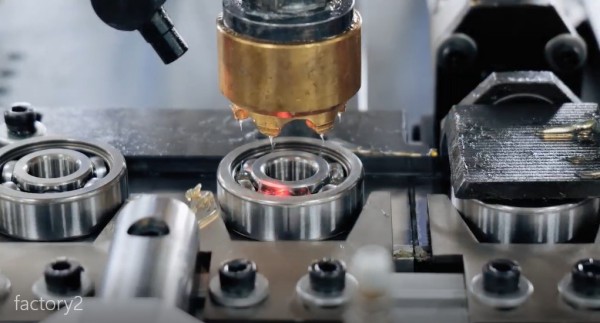
In practice, some engineers, to avoid insufficient lubrication, sometimes adopt a "better too much than too little" approach, applying excessive lubrication. However, excessive lubrication also has adverse effects on the operation of rolling bearings. First, during bearing operation, the rolling elements and cage agitate the grease. Excessive grease increases agitation losses, causing the bearing to overheat. As the temperature rises, the viscosity of the lubricant between the rolling elements and raceway contact surfaces decreases, potentially increasing friction and further raising the temperature. Under certain conditions, this can create a vicious cycle, leading to premature bearing failure.
What is the correct amount of lubricant for a bearing?
Initial Grease Filling in Bearings
The correct amount of lubricant for a bearing is related to the timing of lubrication. Typically, lubrication is applied to the bearing during assembly after equipment completion, known as initial lubrication.
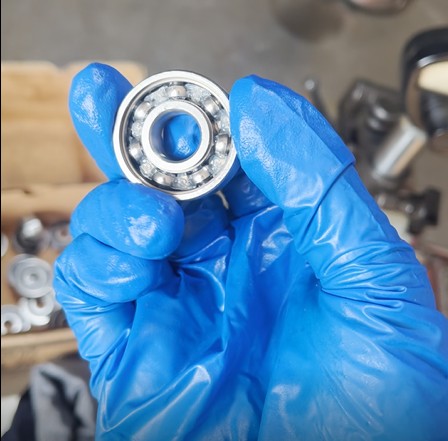
During bearing use, if the bearing is replaced during major equipment overhauls, the application of lubricant to the replaced bearing constitutes initial lubrication.
Before initial lubrication, the bearing contains no lubricant. The purpose of initial lubrication is to ensure proper grease distribution within the bearing. Generally, the basic principle for adding grease is to completely fill the bearing interior (the space between the inner and outer rings and the rolling elements), and fill the remaining space inside the bearing housing (excluding the space remaining after deducting the bearing's dimensions) with 30% to 50% grease.
After the initial grease filling, the bearing begins to rotate, and the position of the grease inside the bearing will redistribute as it rotates. At this time, the grease inside the bearing will be squeezed out, mixing with the grease in the bearing housing, and redistributing itself within the space between the bearing and the bearing housing.
Related News
- Why Are 206KRRB6 Hex Bore Series Agricultural Bearings a Smart Choice for Demanding Farm Machinery
- Why Are BAA-0003 Agricultural Hub Units a Smart Choice for Demanding Farm Machinery
- Why Are GW208PPB5 Square Bore Agricultural Bearings a Smart Choice for Demanding Farm Machinery
- How Does a Deep Groove Ball Bearing Improve Machine Performance?
- How Do Turbocharger Bearings Improve Turbocharger Performance and Reliability?
- How Do Clutch Release Bearings Improve Vehicle Performance and Driving Comfort?
Leave me a message