Which Type of Cylindrical Roller Bearing Is Best for Your Industrial Application
Cylindrical roller bearings are widely recognized for their exceptional radial load capacity, high stiffness, and suitability for demanding industrial environments. However, choosing the right type of cylindrical roller bearing is not always straightforward. With multiple designs such as NU, NJ, NUP, N, and NF series, each offering unique structural and performance advantages, selecting the optimal bearing requires a clear understanding of application conditions.
This in-depth guide explores the working principles, structural types, performance characteristics, and real-world applications of cylindrical roller bearings. By the end of this article, you will be able to confidently determine which cylindrical roller bearing best suits your specific industrial needs.
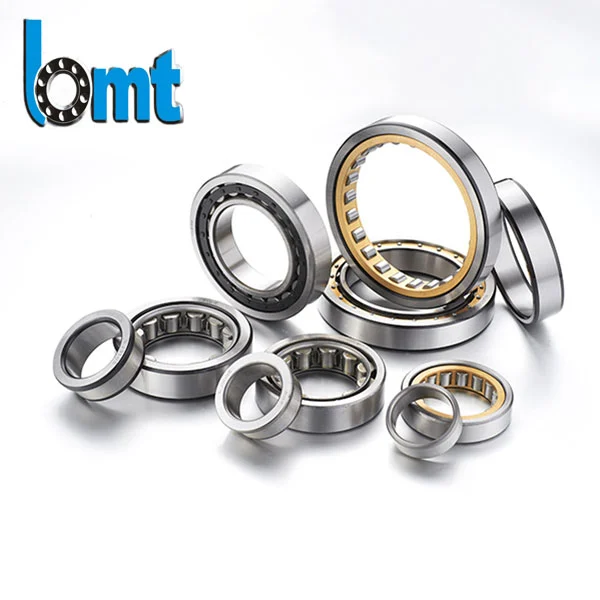
Table of Contents
- What Are Cylindrical Roller Bearings?
- How Do Cylindrical Roller Bearings Work?
- Key Advantages of Cylindrical Roller Bearings
- Main Types of Cylindrical Roller Bearings Explained
- Comparison Table of Cylindrical Roller Bearing Types
- Industrial Applications
- How to Select the Right Cylindrical Roller Bearing
- Maintenance and Service Life Considerations
- Frequently Asked Questions
What Are Cylindrical Roller Bearings?
Cylindrical roller bearings are rolling-element bearings that use cylindrical rollers instead of balls to maintain separation between moving parts. Unlike ball bearings, which point-contact the raceways, cylindrical rollers provide line contact, allowing them to support significantly higher radial loads.
These bearings are commonly used in heavy-duty machinery where high load capacity, rigidity, and operational reliability are essential. Companies like BMT design cylindrical roller bearings to meet the rigorous demands of industries such as steel production, mining, power generation, and industrial gearboxes.
How Do Cylindrical Roller Bearings Work?
The working principle of cylindrical roller bearings is based on rolling motion rather than sliding friction. The cylindrical rollers are guided between the inner and outer raceways, distributing loads evenly across the bearing surface.
- Radial loads are transferred through line contact
- Reduced friction improves energy efficiency
- High stiffness minimizes shaft deflection
Some designs allow axial displacement, making them ideal for applications where thermal expansion of the shaft occurs.
Key Advantages of Cylindrical Roller Bearings
- High Radial Load Capacity – Ideal for heavy machinery
- High Speed Capability – Suitable for high-speed rotation
- Low Friction – Reduced heat generation
- Modular Design – Easy mounting and dismounting
- Long Service Life – When properly lubricated and aligned
Main Types of Cylindrical Roller Bearings Explained
NU Type Cylindrical Roller Bearings
NU type bearings have two ribs on the outer ring and no ribs on the inner ring. This design allows axial displacement in both directions, making it suitable for floating bearing positions.
NJ Type Cylindrical Roller Bearings
NJ bearings feature two ribs on the outer ring and one rib on the inner ring, enabling them to support limited axial loads in one direction.
NUP Type Cylindrical Roller Bearings
NUP bearings include an additional loose rib, allowing them to locate the shaft axially in both directions while still supporting heavy radial loads.
N Type Cylindrical Roller Bearings
N type bearings have two ribs on the inner ring and none on the outer ring, enabling axial displacement similar to NU types but with a different mounting configuration.
NF Type Cylindrical Roller Bearings
NF bearings can support axial loads in one direction due to their rib configuration, often used in gearbox and motor applications.
Comparison Table of Cylindrical Roller Bearing Types
| Type | Axial Load Capacity | Axial Displacement | Typical Applications |
|---|---|---|---|
| NU | No | Both Directions | Floating bearing positions |
| NJ | One Direction | Limited | Gearboxes, motors |
| NUP | Both Directions | No | Main shaft locating positions |
| N | No | Both Directions | Thermal expansion compensation |
| NF | One Direction | Limited | Industrial machinery |
Industrial Applications
Cylindrical roller bearings are widely used across various industries due to their robustness and adaptability:
- Steel rolling mills
- Mining and construction equipment
- Wind turbines
- Industrial gearboxes
- Electric motors and generators
For example, in steel mills, cylindrical roller bearings handle extreme loads and shock conditions while maintaining dimensional stability.
How to Select the Right Cylindrical Roller Bearing
When selecting cylindrical roller bearings, consider the following factors:
- Radial and axial load requirements
- Operating speed
- Mounting arrangement (fixed or floating)
- Lubrication method
- Operating temperature
Working with experienced manufacturers like BMT ensures that your bearing selection is optimized for performance, reliability, and cost efficiency.
Maintenance and Service Life Considerations
Proper maintenance significantly extends bearing service life. Key best practices include:
- Using appropriate lubrication
- Preventing contamination
- Ensuring correct mounting and alignment
- Monitoring vibration and temperature
Regular inspection helps identify early signs of fatigue or wear, preventing costly downtime.
Frequently Asked Questions
Can cylindrical roller bearings support axial loads?
Some types, such as NJ and NUP bearings, can support limited axial loads depending on their rib configuration.
Are cylindrical roller bearings better than ball bearings?
For high radial load and high stiffness applications, cylindrical roller bearings are generally superior to ball bearings.
What industries use cylindrical roller bearings most noteably?
Steel, mining, power generation, and heavy industrial manufacturing rely heavily on cylindrical roller bearings.
How do I extend the life of cylindrical roller bearings?
Correct lubrication, proper installation, and regular maintenance are the most effective ways to maximize bearing lifespan.
Conclusion
Choosing the right cylindrical roller bearing is a critical decision that directly impacts machine reliability and performance. By understanding the differences between bearing types, load capacities, and application requirements, you can ensure optimal operation and long-term durability.
If you are looking for high-quality cylindrical roller bearings engineered for demanding industrial applications, BMT offers professional solutions and technical support. Feel free to contact us today to discuss your requirements and find the right bearing for your project.
Related News
- Why Are 206KRRB6 Hex Bore Series Agricultural Bearings a Smart Choice for Demanding Farm Machinery
- Why Are BAA-0003 Agricultural Hub Units a Smart Choice for Demanding Farm Machinery
- Why Are GW208PPB5 Square Bore Agricultural Bearings a Smart Choice for Demanding Farm Machinery
- How Does a Deep Groove Ball Bearing Improve Machine Performance?
- How Do Turbocharger Bearings Improve Turbocharger Performance and Reliability?
- How Do Clutch Release Bearings Improve Vehicle Performance and Driving Comfort?
Leave me a message