How Can the Right Pillow Block Housing Improve Bearing Performance and Equipment Reliability
Article Summary: A pillow block housing is a critical mechanical component that supports rotating shafts, secures bearings, and helps maintain alignment in industrial equipment. Choosing the right housing involves evaluating material, shaft diameter, bearing compatibility, mounting dimensions, operating conditions, and maintenance requirements. BMT provides pillow block housing solutions for industrial transmission systems, agricultural machinery, pumps, conveyors, and electric motors, helping buyers identify suitable components for their equipment and operating needs.
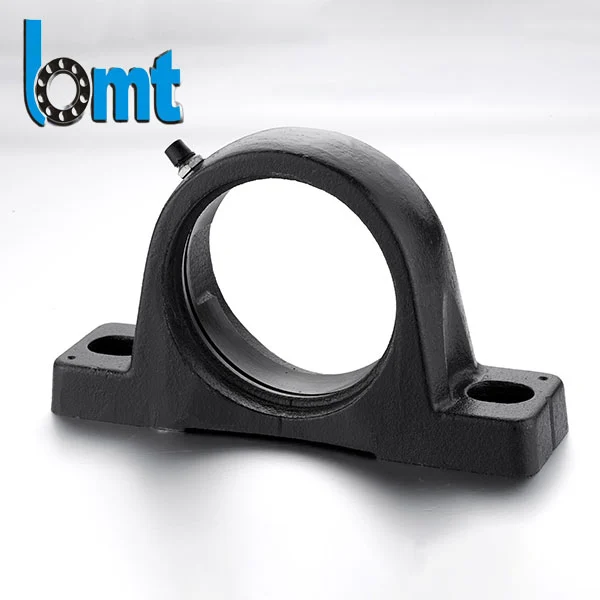
Table of Contents
- What Is a Pillow Block Housing?
- How Does a Pillow Block Housing Work?
- What Materials and Designs Are Available?
- Where Are Pillow Block Housings Used?
- How Do You Choose the Right Pillow Block Housing?
- Pillow Block Housing Selection Comparison
- Installation and Maintenance Best Practices
- Common Problems and Practical Solutions
- Frequently Asked Questions
- Conclusion: Find a Suitable Pillow Block Housing
What Is a Pillow Block Housing?
A pillow block housing is a mechanical support component designed to hold a bearing and secure a rotating shaft to a machine frame or mounting surface. It provides a stable installation point while helping the bearing maintain its intended position during operation. Depending on the design, the assembly may also incorporate seals, covers, lubrication provisions, and mounting hardware.
In industrial applications, the terms pillow block housing and pillow block bearing unit are sometimes used interchangeably. However, they do not always describe exactly the same product. A housing is the structural body, while a complete bearing unit normally includes the housing and a compatible bearing insert.
The distinction matters when purchasing replacement components. Buyers ordering a housing only must verify the bearing dimensions and mounting arrangement separately. Those seeking a ready-to-install assembly should confirm that the bearing, locking mechanism, and housing are compatible.
A properly selected housing can contribute to reliable shaft support, manageable maintenance, and consistent machine operation. It is therefore an important component in equipment design rather than simply a mounting bracket.
How Does a Pillow Block Housing Work?
The housing is secured to a rigid machine base, while the bearing installed inside it supports the rotating shaft. As the shaft turns, the bearing accommodates relative movement between the shaft and the stationary structure. The housing transfers operating loads to the mounting surface and helps keep the bearing correctly positioned.
A typical pillow block bearing assembly performs several functions:
- Shaft support: Holds the rotating shaft in its intended position.
- Load transmission: Transfers supported loads from the bearing to the machine frame.
- Mounting stability: Provides a secure attachment point for the bearing assembly.
- Alignment support: Helps maintain the designed shaft position when the mounting surfaces and installation are correct.
- Contamination protection: Compatible seals or covers can help reduce the entry of dust, moisture, and other contaminants.
- Maintenance access: Depending on the design, lubrication fittings and accessible mounting hardware can simplify servicing.
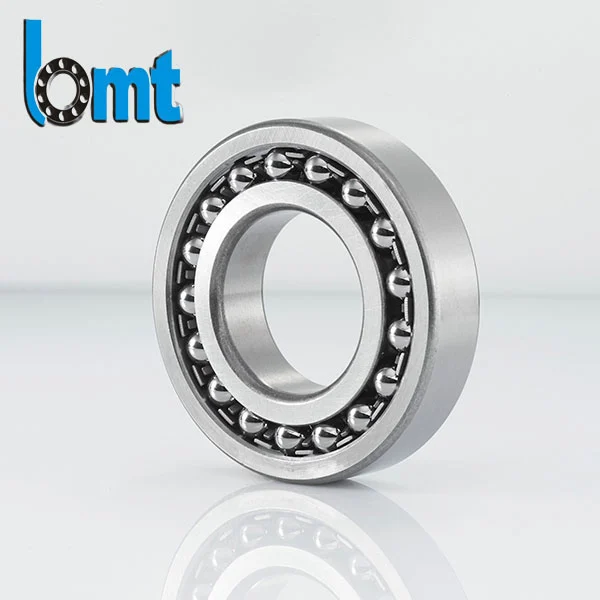
Some bearing inserts have a spherical outer surface that allows limited self-alignment within the housing. This feature can accommodate small angular deviations, but it should not be treated as a substitute for correct shaft alignment, proper mounting, or adequate structural support.
For more information about compatible components, explore BMT's bearing product range and identify the configuration appropriate for your application.
What Materials and Designs Are Available?
Housing material and construction influence load capacity, stiffness, corrosion resistance, weight, and maintenance requirements. The best choice depends on the operating environment and the loads transmitted through the bearing assembly.
1. Cast Iron Pillow Block Housing
Cast iron is widely used in general industrial bearing supports because it offers useful rigidity, good vibration-damping characteristics, and a practical balance between performance and cost. It is commonly considered for conveyors, agricultural equipment, pumps, electric motors, and other machinery operating under ordinary industrial conditions.
However, the actual load capacity depends on the housing design, material grade, bearing selection, mounting arrangement, and operating conditions. A cast iron housing should not be selected on material alone.
2. Stainless Steel Pillow Block Housing
Stainless steel may be appropriate for equipment exposed to moisture, frequent cleaning, or corrosive substances. It is often considered for food-processing machinery, marine equipment, and certain chemical-handling applications.
Buyers should verify the stainless steel grade and assess the entire assembly, including the bearing, seals, lubricant, and fasteners. Corrosion resistance is determined by the complete material specification and service environment, not simply the product description.
3. Split and One-Piece Housing Designs
One-piece housings provide a relatively straightforward structure for many standard applications. Split housings have a separate cap and base, which can make bearing inspection and replacement more convenient when the shaft arrangement makes disassembly difficult.
For heavier industrial applications, BMT's product information includes SN500, SN600, and SNL housing families. These series have different dimensions and compatible bearing arrangements, so the exact model must be checked against the equipment specification.
When evaluating a housing, consider these design details:
- One-piece or split construction.
- Base mounting dimensions and bolt-hole positions.
- Bearing seat dimensions and shaft diameter compatibility.
- Seal and cover arrangements.
- Lubrication access and service requirements.
- Compatibility with the specified bearing and adapter sleeve.
Where Are Pillow Block Housings Used?
Pillow block housings are used wherever rotating shafts require secure support and a practical mounting arrangement. Their versatility makes them suitable for a wide range of industrial and commercial machinery.
- Conveyor systems: Support rotating shafts in material-handling equipment and related transmission assemblies.
- Agricultural machinery: Help support rotating components in equipment exposed to dust, vibration, and changing workloads.
- Pumps: Provide bearing support for compatible shaft arrangements in industrial fluid-handling systems.
- Electric motors: Support shaft assemblies where the selected housing configuration matches the mechanical design.
- Manufacturing equipment: Provide mounting support for rollers, transmission shafts, and other rotating mechanisms.
- Mining and heavy machinery: Support suitable bearing arrangements when housing strength, sealing, and load ratings meet the application's requirements.
Environmental conditions can significantly affect the appropriate specification. Dust-heavy environments may require more effective sealing, while wet or corrosive environments may call for suitable corrosion-resistant materials. High vibration and shock loading also require careful evaluation of the bearing, housing, mounting bolts, and supporting structure.
How Do You Choose the Right Pillow Block Housing?
Selecting the right pillow block housing begins with the machine's actual operating requirements. A housing that fits the shaft may still be unsuitable if its mounting dimensions, load capacity, sealing arrangement, or bearing compatibility do not match the application.
Step 1: Confirm the Shaft Diameter
Identify the shaft diameter and the required bearing bore. For tapered-bore bearings, verify the appropriate adapter sleeve and mounting arrangement. Do not assume that two housings are interchangeable simply because their external shapes appear similar.
Step 2: Verify Bearing Compatibility
Confirm the bearing designation, dimensions, internal clearance requirements, locking method, and lubrication arrangement. The housing and bearing must be compatible as a complete assembly.
Step 3: Calculate Operating Loads
Evaluate radial loads, axial loads, shock loading, shaft speed, and operating duty. Check the manufacturer's bearing ratings and housing specifications rather than relying on general material descriptions.
Step 4: Evaluate the Environment
Consider temperature, humidity, dust, water exposure, chemicals, and cleaning procedures. Select the housing material and sealing arrangement to suit these conditions.
Step 5: Check Installation Dimensions
Compare the overall length, width, height, shaft center height, mounting-hole spacing, and bolt sizes with the existing machine. Dimensional compatibility is particularly important when replacing a discontinued or damaged component.
Step 6: Consider Long-Term Maintenance
Assess lubrication intervals, accessibility, replacement procedures, and spare-part availability. A housing that simplifies inspection and servicing may reduce maintenance effort over the equipment's service life.
Pillow Block Housing Selection Comparison
The following table provides a practical comparison of common housing materials and designs. It is intended as a preliminary selection guide; the final choice should be based on verified product specifications.
| Housing Type | Key Characteristics | Typical Applications | Points to Verify |
|---|---|---|---|
| Cast iron | Rigid structure and useful vibration damping | Conveyors, pumps, agricultural machinery | Load rating, dimensions, corrosion protection |
| Stainless steel | Potentially improved corrosion resistance | Food processing, marine, wet environments | Steel grade, chemical exposure, seals |
| One-piece housing | Simple structural arrangement | Standard shaft-support installations | Bearing fit and replacement access |
| Split housing | Cap-and-base construction for service access | Selected heavy-duty and industrial systems | Joint integrity, fasteners, bearing arrangement |
| Special-purpose housing | Designed for specific operating requirements | Special machinery and demanding environments | Custom dimensions, materials, operating limits |
For reference, BMT's published product page lists SN505 with a 20 mm shaft diameter, SN510 with a 45 mm shaft diameter, and SN520 with a 90 mm shaft diameter. These examples belong to the listed SN housing series. Always consult the complete dimensional table and confirm the required bearing combination before ordering.
View the BMT Pillow Block Housing specifications to review the listed housing models and their corresponding technical dimensions.
Installation and Maintenance Best Practices
Correct installation helps the housing and bearing perform as intended. Even a well-manufactured component can experience premature wear when the mounting base is uneven, the shaft is misaligned, or lubrication is inadequate.
Installation Checklist
- Inspect the housing, bearing seat, shaft, and mounting surface for damage or contamination.
- Verify the housing model, bearing designation, shaft diameter, and mounting dimensions.
- Ensure the mounting surface is sufficiently flat, rigid, and clean.
- Position the housing carefully and align the shaft with the connected equipment.
- Tighten mounting fasteners to the specified torque using the recommended sequence.
- Install the bearing and locking components according to the manufacturer's instructions.
- Apply the specified lubricant and check that seals and covers are correctly installed.
- Rotate the shaft manually when safe and practical, then perform a controlled operating test.
Routine Maintenance
During scheduled inspections, monitor unusual noise, vibration, temperature changes, lubricant condition, loose fasteners, and visible contamination. Establish maintenance intervals according to operating speed, load, environment, and manufacturer recommendations.
Over-lubrication can also create problems, including excess heat in some operating conditions. Use the recommended lubricant type and quantity instead of applying grease indiscriminately.
Common Problems and Practical Solutions
Recognizing early warning signs helps maintenance teams investigate bearing and housing problems before they lead to extended downtime.
- Excessive vibration: Check shaft alignment, mounting rigidity, fastener security, bearing condition, and machine balance.
- Abnormal operating temperature: Investigate lubrication, bearing loading, seal friction, alignment, and operating speed.
- Premature bearing wear: Review contamination control, installation procedures, shaft fits, lubrication, and load conditions.
- Corrosion: Check environmental exposure, material suitability, surface protection, and sealing effectiveness.
- Loose mounting: Inspect the base, mounting bolts, supporting frame, and any evidence of fretting or movement.
- Repeated replacement failures: Verify the original root cause instead of replacing the housing without reviewing the bearing and operating conditions.
These symptoms can have multiple causes. A systematic inspection of the entire rotating assembly is more effective than assuming the housing itself is always responsible.
Frequently Asked Questions
1. What is the main purpose of a pillow block housing?
Its main purpose is to hold and support a compatible bearing, secure the rotating shaft assembly to a mounting surface, and transfer operating loads to the supporting structure.
2. What is the difference between a pillow block housing and a pillow block bearing?
A pillow block housing is the structural component that accommodates the bearing. A pillow block bearing unit generally refers to the assembled product, including the housing and bearing insert. Product terminology varies by manufacturer, so confirm whether a quotation covers the housing alone or a complete unit.
3. Which material is best for a pillow block housing?
Cast iron is a common choice for general industrial applications because of its rigidity and vibration-damping characteristics. Stainless steel may be more appropriate where corrosion resistance is important. The final selection depends on loads, environment, dimensions, and the manufacturer's specifications.
4. How do I find the correct pillow block housing size?
Start with the shaft diameter and bearing designation. Then verify the housing dimensions, mounting-hole spacing, shaft center height, bearing compatibility, and locking arrangement. For replacement purchases, compare the original part number and dimensional drawing.
5. Can a pillow block housing accommodate shaft misalignment?
Some pillow block units use self-aligning bearing inserts that can accommodate limited angular misalignment. The permitted range depends on the bearing design. Excessive misalignment can still cause vibration, uneven loading, and premature failure.
6. How often should a pillow block bearing assembly be maintained?
There is no universal maintenance interval. Inspection and lubrication schedules should reflect the bearing type, operating speed, load, temperature, contamination level, and manufacturer recommendations. Sealed-for-life units may have different service requirements from relubricatable designs.
7. Does BMT support bulk or OEM pillow block housing requirements?
BMT's product page identifies OEM and bulk purchasing as supported options. Buyers should provide the required model, dimensions, bearing arrangement, material, quantity, and application details to confirm availability and the appropriate specification.
Conclusion: Find a Suitable Pillow Block Housing
A reliable pillow block housing selection starts with accurate dimensions, compatible bearings, appropriate materials, and a clear understanding of the operating environment. Attention to load ratings, shaft alignment, mounting quality, sealing, and lubrication can help improve equipment reliability and simplify maintenance.
BMT offers pillow block housing solutions for a range of industrial transmission and machinery applications, with published technical information covering multiple housing series and dimensions. Whether you are replacing an existing component or sourcing housings for new equipment, compare the technical requirements carefully before making a purchasing decision.
Looking for a dependable pillow block housing for your next project? Visit the BMT Pillow Block Housing product page to review available specifications. Share your drawings, shaft dimensions, bearing model, operating conditions, and order quantity with our team. Contact us today to discuss your application, confirm product compatibility, and request a quotation for your pillow block housing requirements.
Related News
- How Can Ball Bearing Steel Balls Improve Precision, Durability, and Machinery Performance
- How Can BAA-0003 Agricultural Hub Units Improve the Reliability of Modern Farm Equipment
- Why Are GW208PPB5 Square Bore Agricultural Bearings Built for Demanding Farm Machinery
- How Can W208PP10 Round Bore Agricultural Bearings Improve the Reliability of Heavy-Duty Farm Machinery
- Why Are 206KRRB6 Hex Bore Series Agricultural Bearings a Smart Choice for Demanding Farm Machinery
- Why Are BAA-0003 Agricultural Hub Units a Smart Choice for Demanding Farm Machinery
Leave me a message