How Does a Deep Groove Ball Bearing Improve Machine Performance?
Article Summary: A Deep Groove Ball Bearing is one of the most widely used rolling bearings for applications that require smooth rotation, reliable load support, low friction, and long operating life. However, selecting the correct bearing involves more than simply matching the shaft diameter. Load direction, speed, sealing, lubrication, operating temperature, dimensional accuracy, noise, installation conditions, and maintenance requirements can all influence bearing performance. This guide explains how Deep Groove Ball Bearings work, how to select the right configuration, how to avoid common failures, and how manufacturers such as Ningbo Demy (D&M) Bearings Co., Ltd. can support demanding industrial and OEM applications.
Table of Contents
- Article Outline
- What Is a Deep Groove Ball Bearing?
- How Does a Deep Groove Ball Bearing Work?
- What Are the Main Components?
- What Advantages Does It Provide?
- How Should You Select the Right Bearing?
- How Do Bearing Seals Affect Performance?
- How Should Load and Speed Be Evaluated?
- How Does Lubrication Influence Bearing Life?
- How Can Installation Problems Be Prevented?
- How Can Common Bearing Failures Be Reduced?
- Where Are Deep Groove Ball Bearings Used?
- Why Consider Ningbo Demy (D&M) Bearings Co., Ltd.?
- Frequently Asked Questions
- Conclusion
Article Outline
- Understand the construction and operating principle of Deep Groove Ball Bearings.
- Identify the technical factors that determine bearing suitability.
- Compare sealing, precision, load, speed, and lubrication requirements.
- Recognize installation and maintenance practices that help prevent premature failure.
- Choose a bearing supplier based on application requirements rather than price alone.
What Is a Deep Groove Ball Bearing?
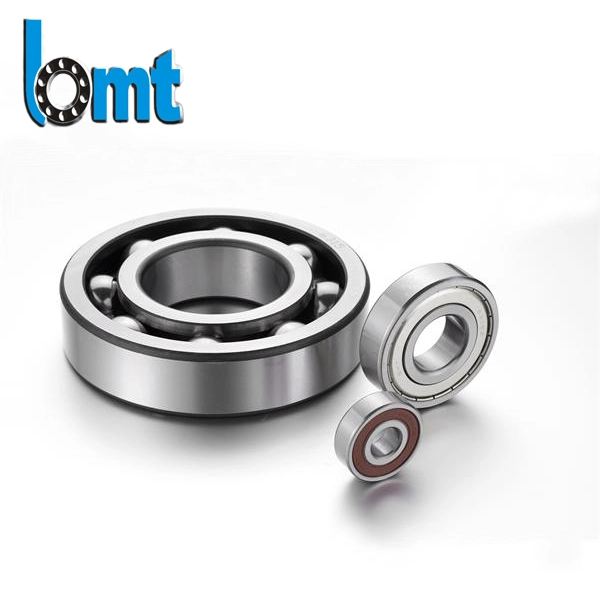
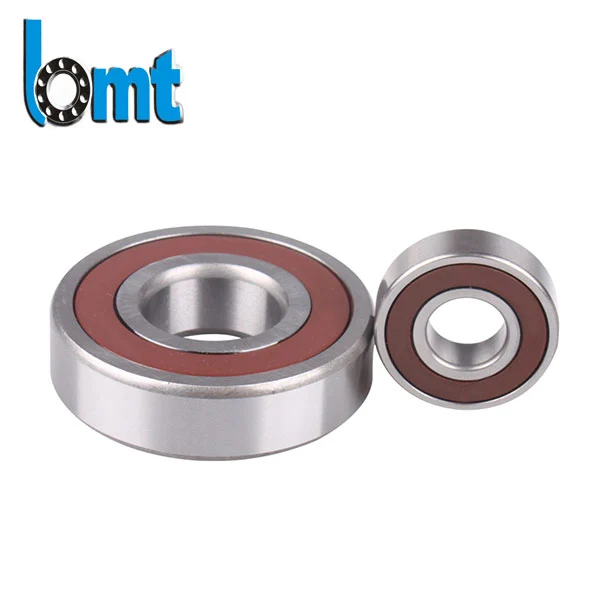
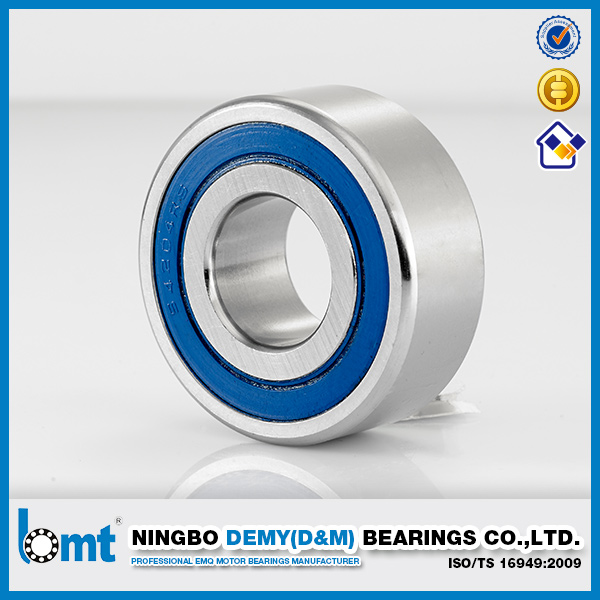
A Deep Groove Ball Bearing is a rolling-element bearing designed primarily to support radial loads while also accommodating axial loads in both directions under suitable operating conditions. Its basic construction consists of an inner ring, outer ring, rolling balls, cage, and, depending on the configuration, shields or seals.
The raceway geometry is designed with a relatively deep groove that allows the balls to maintain continuous contact with the raceways. This simple but effective arrangement gives the bearing a useful combination of low friction, rotational stability, moderate load capacity, and versatility.
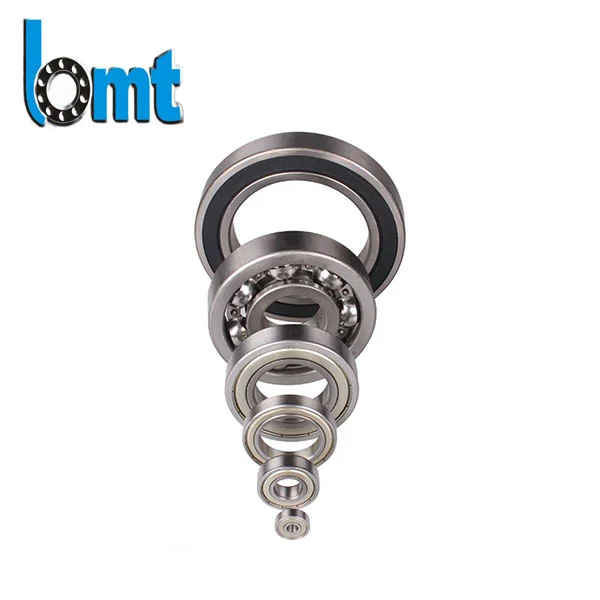
Deep groove designs are available in a broad range of dimensions and configurations. Common series include 6000, 6200, 6300, 6700, and other specialized or application-specific series. The appropriate series depends on available installation space, shaft diameter, radial load, speed, and required service life.
For buyers, one of the most important points is that a bearing with the correct nominal dimensions is not automatically the correct bearing for an application. Two bearings with the same bore diameter can have significantly different load ratings, sealing arrangements, clearance values, precision classes, and speed capabilities.
How Does a Deep Groove Ball Bearing Work?
The operating principle is straightforward. When the shaft rotates, the inner ring rotates with it while the balls roll between the inner and outer raceways. The cage maintains appropriate spacing between the balls and helps control their movement.
Instead of allowing two large metal surfaces to slide directly against each other, the bearing converts much of the sliding motion into rolling motion. This substantially reduces friction and makes continuous rotation practical.
The deep raceway also allows the bearing to handle more than a purely radial load. Depending on the bearing geometry and application conditions, it can accommodate axial forces acting along the shaft in either direction.
During operation, several factors interact:
- Rolling contact: Reduces friction compared with direct sliding contact.
- Raceway geometry: Guides the balls and distributes loads.
- Cage design: Maintains ball spacing and contributes to stable operation.
- Lubricant: Creates a protective film between contacting surfaces.
- Sealing or shielding: Helps control lubricant retention and contamination.
- Material and heat treatment: Influence wear resistance, fatigue strength, and service life.
The result is a compact component capable of supporting continuous shaft rotation in motors, pumps, fans, conveyors, automotive equipment, appliances, and many other machines.
What Are the Main Components?
| Component | Primary Function | Why It Matters |
|---|---|---|
| Inner Ring | Interfaces with the rotating shaft | Determines the bore fit and transfers rotational forces |
| Outer Ring | Interfaces with the housing | Provides the stationary raceway and supports the bearing assembly |
| Rolling Balls | Carry loads between the raceways | Strongly influence friction, load capacity, and fatigue life |
| Cage | Separates and guides the balls | Helps maintain stable rolling conditions |
| Seal or Shield | Controls contamination and lubricant retention | Important for dirty, humid, or outdoor environments |
Every component must work as part of a controlled system. A high-quality raceway cannot compensate for incorrect installation, excessive preload, unsuitable lubricant, or contamination entering the bearing.
What Advantages Does It Provide?
The popularity of Deep Groove Ball Bearings comes from their balance of performance, availability, compactness, and relatively straightforward installation.
- Low friction: Rolling contact helps reduce mechanical resistance and heat generation.
- High rotational capability: Appropriate designs can operate efficiently at relatively high speeds.
- Radial load support: They are particularly suitable for shafts carrying radial loads.
- Bidirectional axial capability: They can accommodate axial forces in both directions within their design limits.
- Compact construction: Standard deep groove designs provide substantial performance without excessive installation space.
- Multiple sealing options: Open, shielded, and sealed configurations allow adaptation to different environments.
- Wide size selection: Metric and inch-series options are available for numerous equipment designs.
- Simple maintenance: Many sealed versions are supplied with factory-applied grease and require minimal routine lubrication.
These characteristics make deep groove bearings especially useful when equipment designers need a dependable general-purpose bearing rather than a highly specialized arrangement.
How Should You Select the Right Bearing?
Correct selection begins with the application rather than the bearing number. A purchasing team should collect the operating requirements before requesting a quotation.
| Selection Factor | Questions to Ask | Potential Consequence of a Poor Choice |
|---|---|---|
| Bore Diameter | What is the actual shaft diameter and tolerance? | Loose or excessive interference fit |
| Outer Diameter | What housing space is available? | Installation incompatibility |
| Width | What axial installation space is available? | Assembly interference |
| Radial Load | What is the continuous and peak load? | Fatigue or premature wear |
| Axial Load | Is there thrust from the operating mechanism? | Excessive contact stress |
| Speed | What are normal and maximum RPM values? | Heat, vibration, or lubricant failure |
| Environment | Is there dust, water, chemicals, or humidity? | Corrosion and contamination |
| Temperature | What are minimum and maximum temperatures? | Lubricant degradation or dimensional changes |
| Noise | Is quiet operation important? | Unsuitable acoustic performance |
For industrial buyers, the most reliable approach is to provide the supplier with complete operating data rather than ordering solely by a previous bearing number. This gives the manufacturer an opportunity to verify the proposed configuration.
How Do Bearing Seals Affect Performance?
Sealing is one of the most frequently overlooked selection decisions. The wrong seal configuration can create either excessive contamination risk or unnecessary friction.
- Open bearings: Suitable when the bearing is installed inside a clean, protected assembly with an independent lubrication system.
- Metal-shielded bearings: Commonly identified by designations such as ZZ or 2Z. Shields help limit the entry of relatively light contaminants while generally maintaining good rotational characteristics.
- Rubber-sealed bearings: Configurations such as 2RS are commonly selected when improved protection against dust and moisture is required.
- Contact-sealed designs: Useful when contamination resistance has higher priority, although seal contact can influence friction and permissible speed.
A high-speed motor operating in a clean enclosure may prioritize low friction and heat generation. An outdoor machine exposed to dust and moisture may instead require stronger contamination protection. Therefore, there is no universally best sealing arrangement.
How Should Load and Speed Be Evaluated?
Load and speed must be considered together. A bearing operating at a modest speed under a moderate load may have very different requirements from a bearing running continuously at high speed.
The dynamic load rating is important when evaluating bearing fatigue life under rotating load. The static load rating becomes particularly relevant when the bearing experiences heavy stationary loads, shock loading, or other conditions that may cause excessive permanent deformation at the contact points.
For a rotating machine, buyers should identify:
- Continuous radial load
- Peak radial load
- Axial load and its direction
- Operating RPM
- Start-stop frequency
- Shock and vibration conditions
- Expected operating hours
- Required reliability and maintenance interval
It is also important not to select a bearing simply because its maximum speed appears higher than the machine's nominal speed. Lubricant type, seal friction, internal clearance, cage design, temperature, and mounting conditions can all affect actual operating performance.
How Does Lubrication Influence Bearing Life?
Lubrication creates a protective film between rolling and raceway surfaces, helping reduce friction, wear, and heat. Inadequate lubrication can accelerate surface damage, while excessive or unsuitable lubricant can also create problems.
When selecting grease or oil, consider:
- Operating temperature
- Rotational speed
- Expected load
- Environmental contamination
- Required relubrication interval
- Compatibility with existing lubricants
- Manufacturer recommendations
Sealed bearings are often advantageous where routine relubrication is difficult because the bearing can be supplied with an appropriate grease charge. However, the grease must still be compatible with the expected temperature and speed range.
More grease is not necessarily better. Overfilling can increase churning, raise operating temperature, and increase resistance. Lubrication should therefore be treated as an engineering parameter rather than simply a maintenance task.
How Can Installation Problems Be Prevented?
Even a high-quality bearing can fail prematurely if installation practices are poor. Many bearing problems originate from mounting force, contamination, shaft misalignment, incorrect fits, or damage to the seals.
- Clean the work area. Keep dirt, metal particles, moisture, and other contaminants away from the bearing.
- Inspect the shaft and housing. Check dimensions, surface condition, burrs, and damage before installation.
- Use the correct mounting force. Installation force should be applied to the appropriate ring rather than transmitted through the rolling elements.
- Avoid impact damage. Direct hammering on the bearing rings or seals can create hidden defects.
- Verify alignment. Excessive misalignment can increase vibration, temperature, and raceway stress.
- Check rotation after installation. The assembly should rotate smoothly without abnormal resistance or noise.
- Follow the equipment manufacturer's fit requirements. Shaft and housing tolerances should match the actual operating conditions.
For production environments, standardized installation procedures are valuable because they reduce variation between operators and production batches.
How Can Common Bearing Failures Be Reduced?
| Problem | Typical Cause | Preventive Action |
|---|---|---|
| Abnormal Noise | Contamination, raceway damage, poor lubrication, or excessive clearance | Control cleanliness and verify the bearing specification |
| Overheating | Excess grease, excessive preload, high speed, or poor lubrication | Check lubrication and mounting conditions |
| Rust | Water, humidity, condensation, or inadequate protection | Use appropriate seals and corrosion-resistant materials where necessary |
| Premature Fatigue | Excessive load, incorrect selection, or contamination | Review load calculations and operating environment |
| Vibration | Misalignment, imbalance, damaged raceways, or incorrect fit | Inspect the complete rotating assembly |
| Seal Damage | Improper installation or excessive temperature | Use correct mounting tools and verify operating limits |
A useful troubleshooting principle is to inspect the entire bearing system rather than immediately blaming the bearing itself. Shaft geometry, housing condition, lubrication, machine alignment, loads, and operating environment all influence bearing behavior.
Where Are Deep Groove Ball Bearings Used?
The versatility of Deep Groove Ball Bearings explains why they appear in so many mechanical systems. Typical applications include:
- Electric motors: Supporting rotor shafts while maintaining smooth and quiet rotation.
- Industrial pumps: Supporting rotating shafts under continuous operating conditions.
- Fans and blowers: Providing low-friction support for high-speed rotating components.
- Gearboxes: Supporting shafts and gears while handling combined radial and axial forces within the bearing's capacity.
- Conveyor systems: Supporting rotating rollers and drive components.
- Automotive systems: Used in selected auxiliary, transmission, electrical, and rotating assemblies.
- Household appliances: Supporting compact motors and rotating mechanisms.
- Agricultural machinery: Used in equipment where dependable rotational support is required.
- Automation equipment: Suitable for many compact and continuously rotating mechanisms.
The exact bearing configuration should always be matched to the application's actual speed, load, environment, and dimensional requirements.
Why Consider Ningbo Demy (D&M) Bearings Co., Ltd.?
Ningbo Demy (D&M) Bearings Co., Ltd. provides bearing solutions for customers requiring consistent dimensions, dependable rotational performance, and application-specific configurations. Its product range includes Deep Groove Ball Bearings designed for applications across industrial machinery, motors, pumps, automotive systems, and other rotating equipment.
For international buyers, supplier capability matters because bearing procurement is not simply a matter of purchasing a standardized metal component. Consistent manufacturing, dimensional control, appropriate material selection, inspection procedures, packaging, and delivery reliability can all affect the total cost of ownership.
When evaluating a supplier, consider the following:
- Whether the manufacturer can provide the required bearing series and dimensions
- Whether material and heat-treatment requirements are clearly controlled
- Whether dimensional and running performance are inspected consistently
- Whether sealing and lubrication options match the application
- Whether OEM or customized requirements can be discussed
- Whether packaging protects bearings during international transportation
- Whether technical information can be provided before bulk purchasing
- Whether the supplier can maintain consistent quality across repeat orders
These factors become especially important when bearings are used in production equipment where unexpected downtime can cost considerably more than the initial component price.
What Should Buyers Confirm Before Ordering?
Before placing an order, prepare a concise technical specification. This helps prevent misunderstandings between the equipment manufacturer, engineering team, purchasing department, and bearing supplier.
- Bearing designation or required dimensions
- Shaft and housing dimensions
- Radial and axial load information
- Normal and maximum rotational speed
- Operating temperature range
- Environmental conditions
- Preferred seal or shield configuration
- Lubrication requirements
- Precision or clearance requirements
- Required quantity and delivery schedule
- Packaging and export requirements
If the exact bearing number is unknown, supplying the operating parameters is often more useful than guessing a model. A qualified manufacturer can then evaluate the available options against the actual application.
Frequently Asked Questions
What is the main purpose of a Deep Groove Ball Bearing?
Its primary purpose is to support rotating shafts while reducing friction. It is mainly designed for radial loads but can also accommodate axial loads in both directions within its operating limits.
Are Deep Groove Ball Bearings suitable for high-speed applications?
Many are suitable for relatively high-speed applications, but the permissible speed depends on bearing size, internal design, lubrication, seal configuration, precision, temperature, and mounting conditions. A sealed bearing may have a different practical speed capability from an equivalent open bearing.
What is the difference between a 2RS and ZZ bearing?
A 2RS configuration generally uses rubber seals, while ZZ or 2Z typically indicates metal shields. Rubber seals generally provide stronger protection against dust and moisture, whereas metal shields can offer lower friction and good performance in cleaner environments.
Can a Deep Groove Ball Bearing support axial loads?
Yes. Deep Groove Ball Bearings can accommodate axial loads in both directions. However, their axial capacity is limited by bearing geometry and operating conditions, so applications with substantial thrust loads may require a different bearing arrangement.
How can I determine the correct bearing size?
Start with the shaft diameter, available housing dimensions, required load capacity, rotational speed, operating temperature, and environmental conditions. If the application is demanding, provide these parameters to the bearing manufacturer rather than selecting a model solely from its bore size.
Why does a bearing become noisy?
Possible causes include contamination, inadequate or excessive lubrication, raceway damage, incorrect mounting, misalignment, excessive clearance, or unsuitable operating conditions. Noise should be investigated together with vibration, temperature, installation, and lubrication data.
How long can a Deep Groove Ball Bearing last?
There is no single service-life value applicable to every application. Bearing life depends on load, speed, lubrication, contamination, material, operating temperature, installation quality, and maintenance. Proper selection and installation can significantly improve service reliability.
Are sealed bearings maintenance-free?
Sealed bearings can substantially reduce routine lubrication requirements, but they should not be considered immune to failure. Operating conditions, installation quality, contamination, temperature, and machine loads still need to be controlled.
Conclusion
A Deep Groove Ball Bearing may be a relatively compact machine component, but its selection can have a major influence on equipment reliability. The right bearing should match the complete application, including load, speed, temperature, environment, sealing, lubrication, dimensional requirements, and expected operating life.
For standard rotating equipment, deep groove designs offer an excellent balance of low friction, load support, compact construction, and application flexibility. However, achieving reliable performance requires more than choosing a familiar bearing number. Correct fits, clean installation, suitable lubrication, proper sealing, and regular condition monitoring are equally important.
For OEMs, distributors, maintenance teams, and industrial equipment manufacturers, working with an experienced bearing supplier can simplify specification and reduce the risk of inconsistent component performance. Ningbo Demy (D&M) Bearings Co., Ltd. can support customers seeking dependable Deep Groove Ball Bearing solutions for different machinery and operating conditions.
Need help selecting the right Deep Groove Ball Bearing for your equipment? Share your bearing size, load, speed, operating environment, and application requirements with Ningbo Demy (D&M) Bearings Co., Ltd. for a suitable solution. Contact us today to discuss your bearing requirements and move forward with a reliable supply solution.
Related News
- How Can Ball Bearing Steel Balls Improve Precision, Durability, and Machinery Performance
- How Can BAA-0003 Agricultural Hub Units Improve the Reliability of Modern Farm Equipment
- Why Are GW208PPB5 Square Bore Agricultural Bearings Built for Demanding Farm Machinery
- How Can W208PP10 Round Bore Agricultural Bearings Improve the Reliability of Heavy-Duty Farm Machinery
- Why Are 206KRRB6 Hex Bore Series Agricultural Bearings a Smart Choice for Demanding Farm Machinery
- Why Are BAA-0003 Agricultural Hub Units a Smart Choice for Demanding Farm Machinery
Leave me a message