What's the first step in troubleshooting motor bearing overheating
Let's start from the beginning. Once a motor overheats, the first thing an engineer does is to determine where the heat is coming from. The main components of the motor system are the targets for investigation. Therefore, we need to understand the possible overheating locations or the locations where overheating has been measured. These include:
1. Excessive motor housing temperature;
2.Excessive shaft temperature;
3.Excessive temperature near the seals;
4.Excessive bearing temperature.
01 Temperature Measurement Location
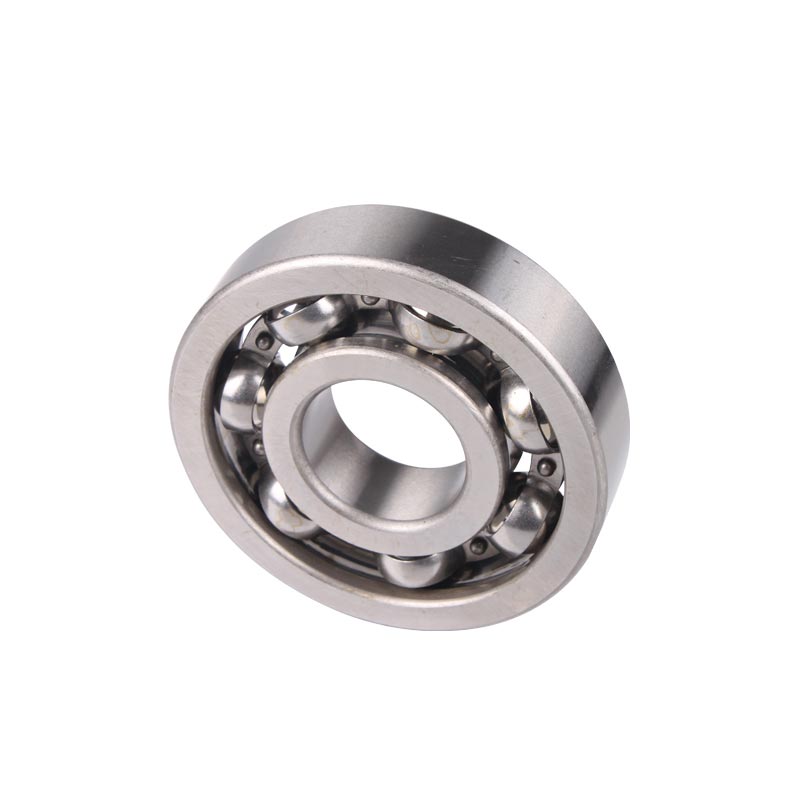
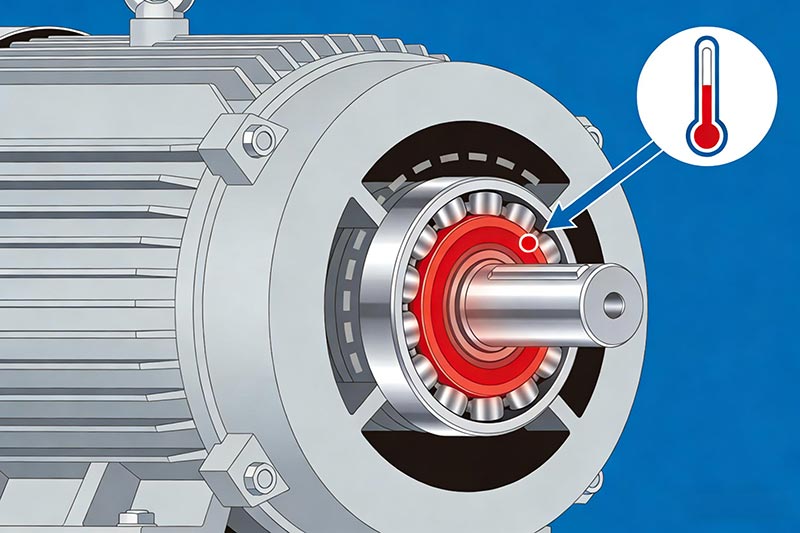
Regarding the bearings, the temperature measurement location needs to be emphasized. The motor bearing temperature we usually refer to is the temperature of the outer ring of the motor bearing. In motor manufacturing, thermometers may be embedded, and the embedded position should be as close as possible to the outer ring of the motor bearing. This ensures that the measured data is closer to the required motor bearing temperature.
02 Bearing Temperature
In engineering practice, motor engineers often mistakenly consider the motor insulation temperature rating as the bearing temperature.
For example, someone once asked about Class B insulation, hoping to select bearings based on a temperature of 120 degrees Celsius. This is unreasonable. Because the motor insulation class temperature refers to the temperature of the motor winding. The winding insulation needs to maintain its insulation effect at this temperature. However, after the winding heats up, the heat is conducted to the bearings through the motor housing end cover or shaft, and the heat dissipates, so the temperature will be significantly lower. Therefore, this temperature cannot be used to specify requirements for the bearings.
03 Environmental Impact
The measurement of motor bearing overheating is also affected by the environment. The same motor, under the same load, will exhibit different temperatures in different ambient temperatures. Therefore, if a motor in a location with a warmer ambient temperature shows a higher temperature than a motor in a location with a colder ambient temperature under the same operating conditions, it doesn't necessarily mean there is a problem with the motor. Another example: in India, motor manufacturers often require high-temperature grease as the standard lubricant; their request is consistent with local conditions. However, if your motor is exported to a northern region, the lubricant must be adjusted.
A similar case occurred in China. A Chinese motor manufacturer produced motors for snowplows for Russia, and widespread bearing burnout problems occurred in Russia. In essence, the problem stemmed from not considering the effect of ambient temperature on lubrication requirements. The grease failed to provide adequate lubrication at low temperatures, instead having a detrimental effect, leading to insufficient lubrication and bearing failure. The bearing showed signs of overheating and burning before failure, but this happened very quickly and went unnoticed by the on-site engineers, leaving no time to address the problem. This is a typical case of bearing overheating and burnout in a "low-temperature" environment.
Therefore, before discussing motor bearing overheating, a comprehensive approach is necessary, as illustrated in the mind map above. In the initial stages of finding a solution, a large amount of irrelevant information can be filtered out, allowing for faster analysis. Therefore, the initial assessment is crucial. The more detailed the elimination process becomes, the less efficient it is.
Related News
- Why Are 206KRRB6 Hex Bore Series Agricultural Bearings a Smart Choice for Demanding Farm Machinery
- Why Are BAA-0003 Agricultural Hub Units a Smart Choice for Demanding Farm Machinery
- Why Are GW208PPB5 Square Bore Agricultural Bearings a Smart Choice for Demanding Farm Machinery
- How Does a Deep Groove Ball Bearing Improve Machine Performance?
- How Do Turbocharger Bearings Improve Turbocharger Performance and Reliability?
- How Do Clutch Release Bearings Improve Vehicle Performance and Driving Comfort?
Leave me a message