The Impact of Bearing Maintenance on Service Life
Bearing service life refers to the number of revolutions or hours a bearing undergoes under a certain load before pitting occurs. Within this service life, initial fatigue damage should occur on any of its bearing rings or rolling elements.
However, in our daily practical use, it is clearly observed that bearings with identical appearances under the same working conditions have significantly different actual service lives. Many factors affect bearing service life. Today, we will briefly introduce the impact of bearing maintenance and rust prevention on bearing service life.
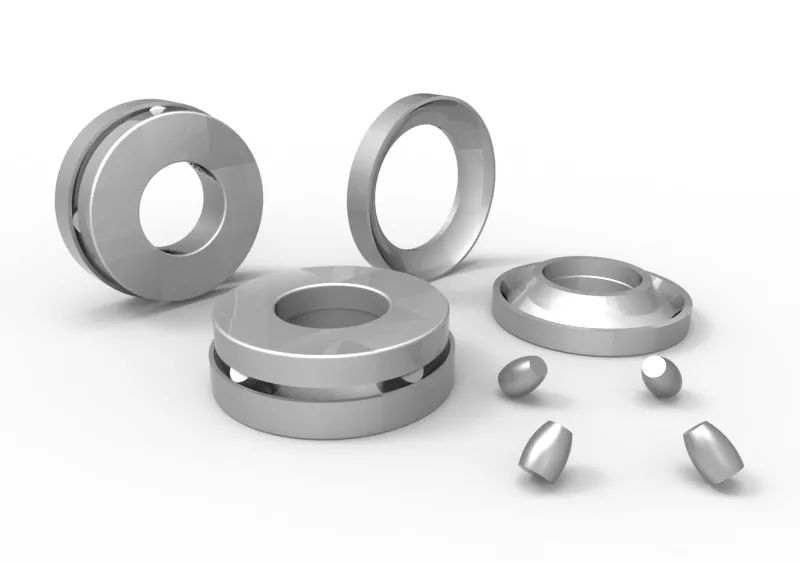
Bearing Maintenance Cycle
How often should bearings be maintained? Theoretically, bearings can be used for 20,000-80,000 hours, but the specific lifespan depends on wear during use, workload, and subsequent maintenance, etc.
How to Maintain Bearings?
To ensure that bearings fully utilize and maintain their intended performance for a long time, regular maintenance (regular inspection) must be performed effectively. Proper regular inspections allow for early detection of faults and prevention of accidents, which is crucial for improving productivity and economy. Storage: Bearings are coated with an appropriate amount of rust-preventive oil and packaged with rust-proof paper at the factory. As long as this packaging is not damaged, the quality of the bearing will be guaranteed.
However, for long-term storage, it is advisable to store the bearing on a shelf 30cm above the ground, under conditions of humidity below 65% and temperature around 20℃. Additionally, the storage location should avoid direct sunlight or contact with cold walls. Cleaning: When disassembling and inspecting the bearing, first record its appearance using methods such as photography. Also, confirm the amount of remaining lubricant and take a sample of the lubricant before cleaning the bearing.
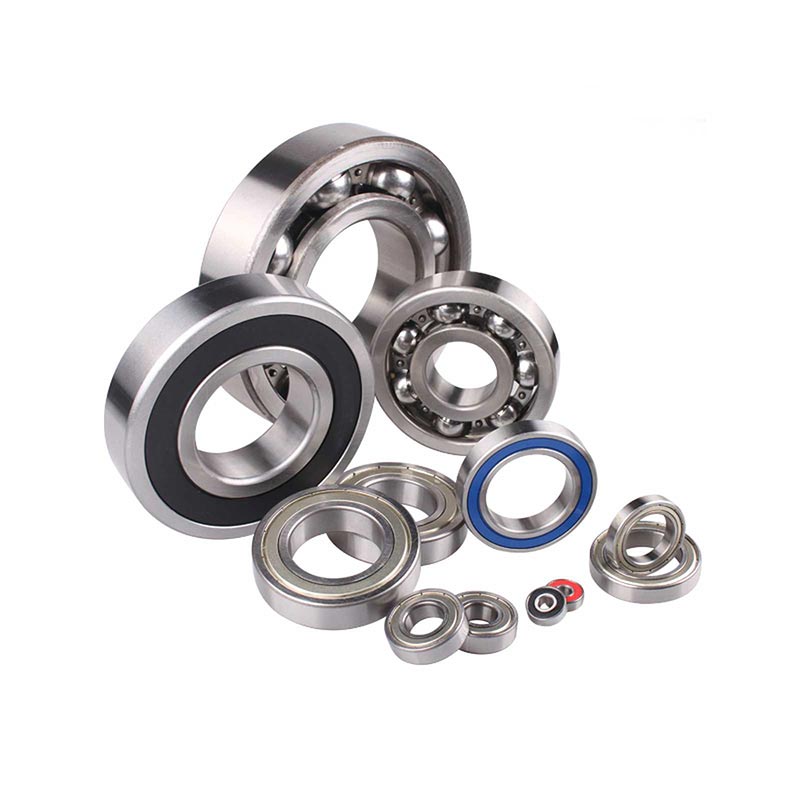
Bearing Maintenance Steps
1. Bearings should be replaced regularly, with the replacement cycle set reasonably according to the bearing's operating conditions.
2. New bearings must be inspected before use. The inspection should include checking the packaging (preferably with an instruction manual and certificate of conformity) for integrity; ensuring the markings (manufacturer's name, model number) are clear; and checking the appearance (rust, damage) for good condition.
3. New bearings that pass inspection do not require cleaning under normal operating conditions (for motors with 2 poles or higher); new sealed bearings do not require cleaning.
4. The bearing cap and bearing itself must be cleaned before changing the oil. Cleaning is divided into rough cleaning and fine cleaning. Rough cleaning uses clean diesel or kerosene, and fine cleaning uses clean gasoline.
6. After cleaning the bearing, rotate it by hand; it should rotate freely. Use your hand to gently shake it radially and axially to initially determine if it is loose or has excessive clearance. Check the clearance if necessary. Replace any bearings with severely worn, rusted, or with flaking metal, such as those with balls or rollers.
7. After cleaning and inspecting the bearing, wipe off the cleaning agent with a white cloth (or let it air dry), and add qualified grease. Do not add different types of grease to the same bearing.
8. Ensure the surrounding environment is dusty when adding grease. Use clean hands to add grease. Slowly rotate the entire bearing with one hand, and use your middle and index fingers to press the grease into the bearing cavity with the other. Add grease to one side before moving to the other. Remove excess grease according to the number of motor poles.
9. Grease amount for bearings and bearing caps: For bearing caps, the grease amount should be 1/2 to 2/3 of the cap capacity (upper limit for higher motor pole numbers); for bearings, the grease amount should be 1/2 to 2/3 of the inner and outer ring cavities (upper limit for higher motor pole numbers).
10. Motor end covers with oil filling and drain holes must also be cleaned during oil changes to ensure unobstructed passage. The oil filling hole must be filled completely when adding oil.
Bearing Cleanliness
The cleanliness of bearings has a significant impact on bearing life. Higher cleanliness results in longer lifespan. Different cleanliness levels of lubricating oil greatly affect the lifespan of ball bearings. Therefore, improving the cleanliness of lubricating oil can extend bearing life. Furthermore, if the contaminant particles in the lubricating oil are controlled below 10µm, the bearing life can increase several times over.
(1) Impact on Vibration: Cleanliness significantly affects the vibration level of bearings, especially in the high-frequency band. Bearings with high cleanliness have lower vibration velocity values, particularly in the high-frequency band.
(2) Impact on Noise: Experiments have been conducted on the impact of dust in bearing grease on noise, demonstrating that more dust results in greater noise.
(3) Impact on Lubrication Performance: Decreased bearing cleanliness not only affects the formation of the lubricating oil film but also causes grease deterioration and accelerates its aging, thus reducing the lubrication performance of the grease.
Methods of Rust Prevention for Bearings
1. Surface Cleaning: Cleaning methods must be selected according to the nature of the surface to be prevented from rust and the conditions at the time. Commonly used methods include solvent cleaning, chemical cleaning, and mechanical cleaning.
2. Surface Drying: After cleaning, the surface can be dried with filtered compressed air, or dried in a dryer at 120-170°C, or wiped dry with a clean cloth.
3. Immersion Method: For some small items, immersion in rust-preventive grease is used to coat the surface with a layer of rust-preventive grease. The thickness of the oil film can be controlled by adjusting the temperature or viscosity of the rust-preventive grease.
4. Brushing Method: Used for outdoor construction equipment or specially shaped products where immersion or spraying is not suitable. When brushing, care must be taken to avoid accumulation and missed areas.
5. Spraying Method: For some large rust-preventable items, immersion oiling cannot be used. Spraying is generally performed using filtered compressed air at approximately 0.7 MPa in a clean environment. Spraying is suitable for solvent-diluted rust-preventive oils or thin-layer rust-preventive oils, but proper fire prevention and labor protection measures must be taken.
Note that the following acids cannot be used for bearing rust removal: sulfuric acid, hydrochloric acid, dilute sulfuric acid, and dilute hydrochloric acid. These acids will damage the good metal parts, so these liquids must never be used! There are several other liquids available in daily life that can remove rust without damaging the good metal parts, but their effectiveness varies. First is dilute oxalic acid, in a 3:1 ratio with water (3 parts oxalic acid, 1 part water). This is slower but very effective and readily available. Second is rust remover, also called mechanical rust remover, which is less readily available but removes rust quickly and very effectively.
Related News
- Why Are 206KRRB6 Hex Bore Series Agricultural Bearings a Smart Choice for Demanding Farm Machinery
- Why Are BAA-0003 Agricultural Hub Units a Smart Choice for Demanding Farm Machinery
- Why Are GW208PPB5 Square Bore Agricultural Bearings a Smart Choice for Demanding Farm Machinery
- How Does a Deep Groove Ball Bearing Improve Machine Performance?
- How Do Turbocharger Bearings Improve Turbocharger Performance and Reliability?
- How Do Clutch Release Bearings Improve Vehicle Performance and Driving Comfort?
Leave me a message