How to Determine Bearing Problems Through Grease Color Changes?
During storage and use, lubricants sometimes undergo changes in their properties due to various factors, and color change is one of the most easily noticeable changes. Therefore, mechanical engineers often ask whether the color change of lubricating grease can be used to determine whether the machinery or bearing is operating normally. In fact, such a judgment is very difficult.
Regarding the lubricating grease itself, its color is one of its physical properties. The color of lubricating grease is related to its composition and the composition of its additives. Different lubricating greases have different additives, operating conditions, and temperature ranges, so there cannot be a unified standard. Even the same type of lubricating grease may have color differences due to different manufacturing batches and slightly different formulations. Therefore, using color change as a basis for judgment may not be reliable.
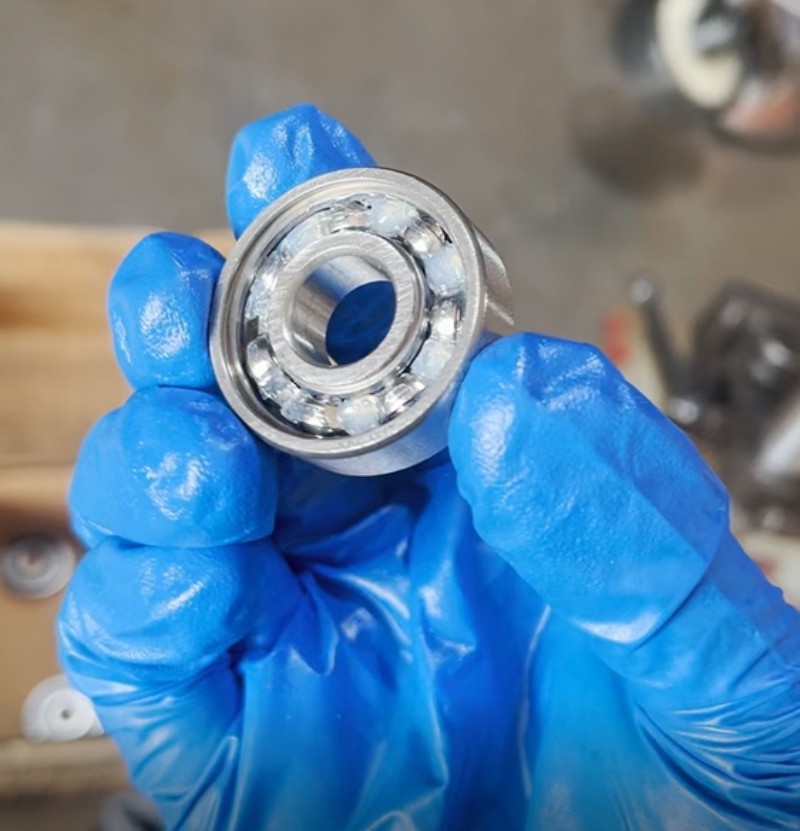
From the perspective of usage conditions, after the lubricating grease is put into use, different operating conditions and temperature conditions will lead to subtle differences in color, even for the same lubricating grease.
From a storage perspective, lubricating grease will undergo a certain degree of oxidation after a period of time. After being stored (or used) for a period, the lubricating grease comes into contact with air, and the metal (the bearing itself and related components such as the bearing housing) also acts as a catalyst in this oxidation reaction. Although many lubricating greases now contain antioxidant additives, these only reduce the rate of oxidation. Therefore, the color of the lubricating grease will continuously change.
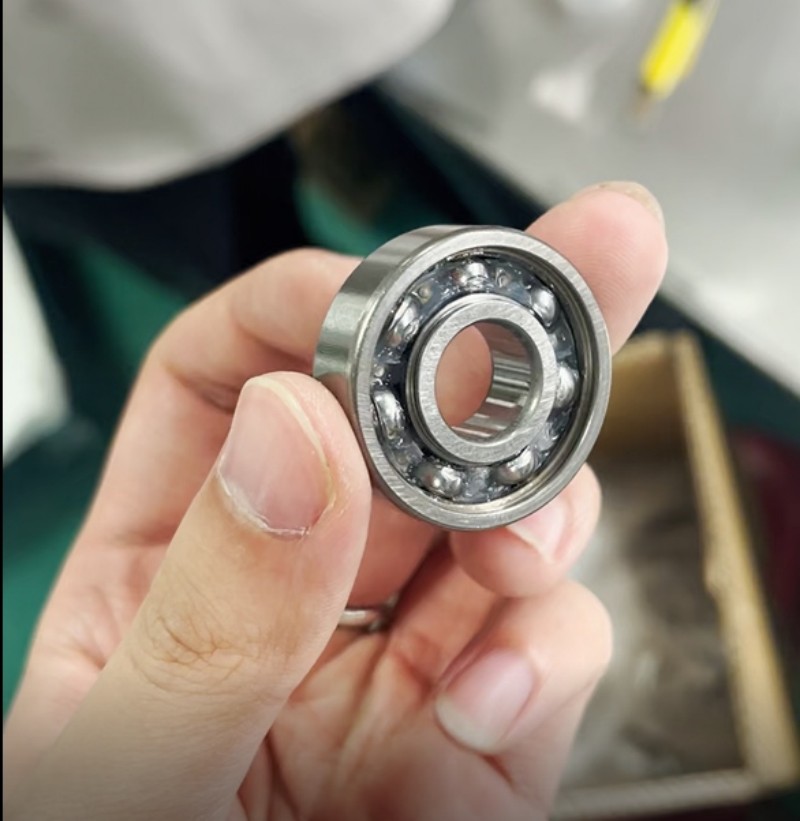
From the perspective of the bearing after it is put into use, if the bearing is operating abnormally or foreign matter enters, it will cause changes in the performance and color of the lubricating grease. If the temperature is high, the lubricating grease will accelerate oxidation until it carbonizes and turns charcoal black.
On the other hand, changes in the bearing itself or the ambient temperature will cause the base oil in the lubricating grease to continuously move in and out of the thickener, and the base oil may not completely return each time. Over time, the performance of the grease will change and may no longer meet lubrication requirements. Lubricating grease with insufficient base oil may change color. The higher the temperature, the greater the change in grease performance, and the greater the color change. If the temperature is very high, it will carbonize, turning dark brown or black. If foreign matter enters the bearing, including metal shavings produced by the bearing's own wear or friction between the foreign matter and the shaft and bearing housing, the lubricant will change color to a shade similar to or even identical to the foreign matter.
If water or other liquids enter the grease, the grease may sometimes become lighter in color, appearing cloudy, or sometimes becoming foamy or flocculent.
Overall, judging whether the equipment is functioning normally based on the color of the lubricant is very difficult, and it is often impossible to obtain accurate conclusions. However, there is some qualitative possibility. For example, if the grease darkens, turns black, or dries out, it may indicate severe oxidation of the lubricant or exposure to high temperatures. If the viscosity or color of the grease changes, or if it becomes lighter or appears emulsified, it may be related to contamination by water or other liquids. However, the above conclusions cannot be used as definitive diagnostic evidence; at best, they provide some qualitative possibilities for on-site personnel observing the lubricant. Specific changes occurring within the grease require methods such as oil analysis to obtain quantitative conclusions.
Related News
- Why BMT Bearings Achieves a 0.12% Global Return Rate – A Deep Dive into Quality Control
- How to Choose the Best Motorcycle Crankshaft Bearing for Performance, Durability, and Engine Efficiency
- What Are Deep Groove Ball Bearings and Why Are They Essential for Modern Machinery
- Motorcycle Wheel Bearings: How Do They Affect Safety, Performance, and Riding Experience
- What Are Single Direction Thrust Ball Bearings and How Do They Improve Axial Load Performance in Industrial Applications
- What Are Square Bore Agricultural Bearings and How Do They Improve Farm Machinery Performance
Leave me a message