When a bearing fails, which symptom appears first: heat, vibration, or noise?
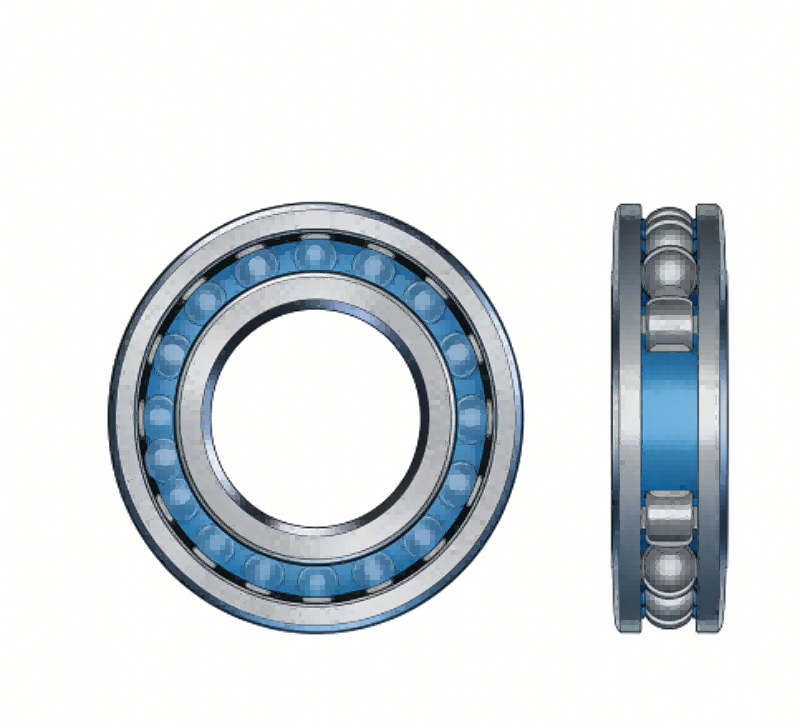
When a bearing fails, which symptom appears first: heat, vibration, or noise? Many field engineers have encountered this dilemma. In reality, these three phenomena originate almost simultaneously from the source of the failure—when spalling, wear, or other damage occurs on the bearing raceway or rolling elements, the change in contact conditions simultaneously triggers vibration, frictional heat, and sound waves. However, in on-site monitoring, we often only detect one or two of these signs first, which is closely related to the signal propagation characteristics and detection methods.
Why are the signals detected at different times?
1.Although vibration signals are sensitive, the small increase in vibration caused by initial minor damage is often masked by ambient noise, requiring precision sensors or spectral analysis for early detection.
2.Noise is essentially the acoustic manifestation of vibration and is easily interfered with by equipment background noise; it is only easily detected when a specific frequency is prominent.
3.Temperature changes are the most delayed—local frictional heat takes time to accumulate until it affects the entire bearing housing or lubrication system before it can be monitored.
Interpretation clues for typical scenarios:
1.Increased temperature but low vibration: This may indicate poor lubrication leading to direct metal-to-metal friction. At this point, no significant surface damage has yet formed, so the lubrication status should be checked first.
2.Prominent noise but normal vibration and temperature: This suggests the presence of a local early defect (such as minor spalling). Although the total vibration value has not increased, the noise at specific frequencies has "revealed" the fault characteristics.
3.Severe vibration but stable temperature: This often points to installation misalignment problems or abnormal load. In this case, frictional heat has not significantly increased, and the mechanical fit conditions need to be checked.

All in all:
There is no fixed "signal sequence formula" for fault diagnosis. The value of field experience lies in combining vibration spectrum analysis, temperature trend tracking, and noise frequency identification to build multi-dimensional judgment criteria. Understanding how these three types of signals originate from the same fault source and how they manifest in different dimensions due to system characteristics is key to achieving accurate early warning.
Related News
- Why Are 206KRRB6 Hex Bore Series Agricultural Bearings a Smart Choice for Demanding Farm Machinery
- Why Are BAA-0003 Agricultural Hub Units a Smart Choice for Demanding Farm Machinery
- Why Are GW208PPB5 Square Bore Agricultural Bearings a Smart Choice for Demanding Farm Machinery
- How Does a Deep Groove Ball Bearing Improve Machine Performance?
- How Do Turbocharger Bearings Improve Turbocharger Performance and Reliability?
- How Do Clutch Release Bearings Improve Vehicle Performance and Driving Comfort?
Leave me a message