What Are Angular Contact Ball Bearings and Why Are They Critical for High-Speed Applications
Angular Contact Ball Bearings are essential components in modern mechanical systems where high speed, precision, and combined axial and radial load capacity are required. This article provides a comprehensive explanation of what angular contact ball bearings are, how they work, why they outperform standard bearings in demanding applications, and how to select the right type for your machinery. Drawing on industry practices and technical standards, this guide is designed to support engineers, buyers, and decision-makers seeking reliable bearing solutions from trusted manufacturers like BMT.
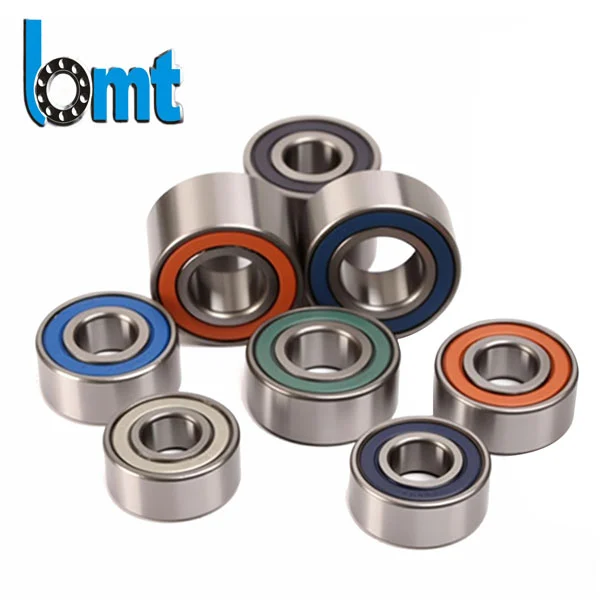
Table of Contents
- 1. What Are Angular Contact Ball Bearings?
- 2. How Do Angular Contact Ball Bearings Work?
- 3. Why Are Angular Contact Ball Bearings Ideal for High-Speed Applications?
- 4. Key Structural Features and Contact Angles
- 5. Load Capacity: Axial vs Radial Performance
- 6. Single Row vs Double Row Angular Contact Ball Bearings
- 7. Common Applications Across Industries
- 8. Comparison with Other Bearing Types
- 9. Selection Guide: How to Choose the Right Bearing
- 10. Installation, Lubrication, and Maintenance Tips
- FAQ: Angular Contact Ball Bearings
1. What Are Angular Contact Ball Bearings?
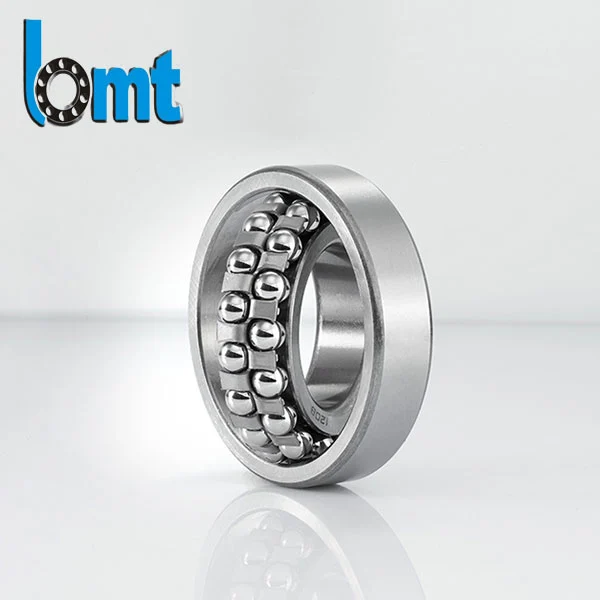
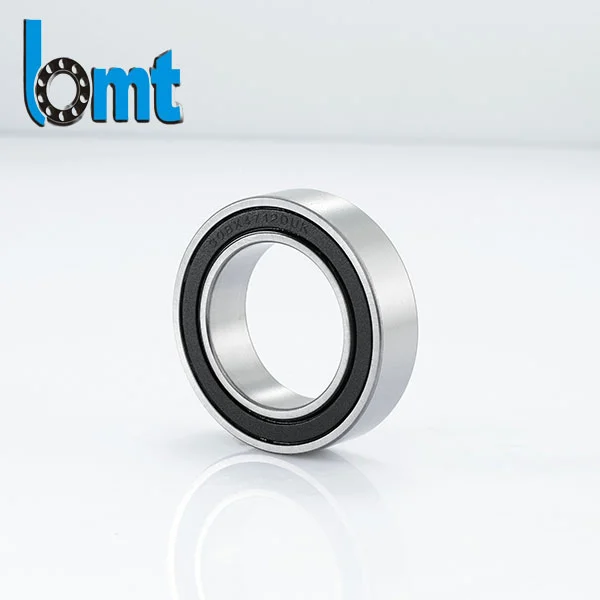
Angular Contact Ball Bearings are a type of rolling bearing designed to support combined radial and axial loads. Unlike standard deep groove ball bearings, the raceways of angular contact ball bearings are offset relative to each other in the axial direction, creating a defined contact angle between the balls and raceways.
This design enables the bearing to handle axial loads in one direction while maintaining excellent radial load capacity. Because of this unique structure, angular contact ball bearings are widely used in high-speed, high-precision equipment.
According to technical specifications outlined in industry references such as Angular Contact Ball Bearings technical overview, these bearings are engineered for stability, reduced friction, and long service life.
2. How Do Angular Contact Ball Bearings Work?
The defining feature of angular contact ball bearings is the contact angle. This angle determines how forces are transmitted through the bearing:
- Radial loads are transferred perpendicular to the shaft
- Axial loads are transferred parallel to the shaft
Because the load path is angled, axial forces generate radial components and vice versa. This allows the bearing to support higher combined loads compared to conventional bearings.
However, single-row angular contact ball bearings can only support axial loads in one direction. To counteract this, they are often mounted in pairs or sets using arrangements such as:
- Back-to-back (DB)
- Face-to-face (DF)
- Tandem (DT)
3. Why Are Angular Contact Ball Bearings Ideal for High-Speed Applications?
High-speed machinery demands bearings that minimize friction, maintain dimensional accuracy, and dissipate heat effectively. Angular contact ball bearings excel in these areas due to:
- Optimized internal geometry for reduced friction
- High-precision manufacturing tolerances
- Stable performance under thermal expansion
- Superior axial stiffness
Manufacturers like BMT design angular contact ball bearings to meet the performance requirements of CNC spindles, turbines, and high-speed motors, where rotational accuracy is critical.
4. Key Structural Features and Contact Angles
Angular contact ball bearings are available with different contact angles, commonly:
| Contact Angle | Typical Application | Performance Characteristics |
|---|---|---|
| 15° | Ultra-high speed spindles | Low friction, moderate axial load |
| 25° | Precision machinery | Balanced speed and axial capacity |
| 40° | Heavy axial load equipment | High axial stiffness |
Choosing the correct contact angle is critical for optimizing bearing life and performance.
5. Load Capacity: Axial vs Radial Performance
Angular contact ball bearings outperform deep groove bearings when axial loads are significant. Their ability to handle combined loads makes them suitable for:
- Machine tool spindles
- Gearboxes
- Pumps and compressors
By pairing bearings correctly, systems can achieve bidirectional axial load capacity while maintaining rigidity.
6. Single Row vs Double Row Angular Contact Ball Bearings
| Type | Advantages | Typical Use |
|---|---|---|
| Single Row | High speed, flexible arrangements | Precision spindles |
| Double Row | Supports axial loads in both directions | Compact industrial equipment |
7. Common Applications Across Industries
Angular contact ball bearings are widely used in:
- CNC machine tools
- Robotics and automation
- Aerospace systems
- Electric motors
- Precision pumps
BMT supplies angular contact ball bearings engineered for consistent quality and long-term reliability across these demanding sectors.
8. Comparison with Other Bearing Types
| Bearing Type | Axial Load | Speed Capability | Precision |
|---|---|---|---|
| Angular Contact Ball | High | Very High | Excellent |
| Deep Groove Ball | Low | High | Good |
| Tapered Roller | Very High | Moderate | Moderate |
9. Selection Guide: How to Choose the Right Bearing
When selecting angular contact ball bearings, consider:
- Load direction and magnitude
- Required rotational speed
- Precision class (P0, P5, P4, P2)
- Lubrication method
- Operating temperature
Consulting with experienced manufacturers such as BMT ensures optimal bearing selection tailored to your application.
10. Installation, Lubrication, and Maintenance Tips
- Always follow recommended preload specifications
- Use clean tools and environments during installation
- Select grease or oil suitable for speed and temperature
- Monitor vibration and noise during operation
FAQ: Angular Contact Ball Bearings
Q1: Can angular contact ball bearings handle axial loads in both directions?
Single-row bearings handle axial loads in one direction only. Paired or double-row configurations allow bidirectional axial load support.
Q2: Are angular contact ball bearings suitable for high-speed motors?
Yes. Their low friction and precision design make them ideal for high-speed motor applications.
Q3: What industries rely most on angular contact ball bearings?
Machine tools, aerospace, robotics, and precision manufacturing industries rely heavily on these bearings.
Q4: How does preload affect bearing performance?
Proper preload improves rigidity and accuracy but excessive preload may reduce bearing life.
As global industries continue to demand higher speed, accuracy, and reliability, Angular Contact Ball Bearings remain a cornerstone of advanced mechanical design. With proven expertise, strict quality control, and a broad product range, BMT delivers bearing solutions that meet modern engineering challenges.
If you are looking for dependable angular contact ball bearings tailored to your application, contact us today to discuss your requirements with BMT’s professional team.
Related News
- Why Are 206KRRB6 Hex Bore Series Agricultural Bearings a Smart Choice for Demanding Farm Machinery
- Why Are BAA-0003 Agricultural Hub Units a Smart Choice for Demanding Farm Machinery
- Why Are GW208PPB5 Square Bore Agricultural Bearings a Smart Choice for Demanding Farm Machinery
- How Does a Deep Groove Ball Bearing Improve Machine Performance?
- How Do Turbocharger Bearings Improve Turbocharger Performance and Reliability?
- How Do Clutch Release Bearings Improve Vehicle Performance and Driving Comfort?
Leave me a message