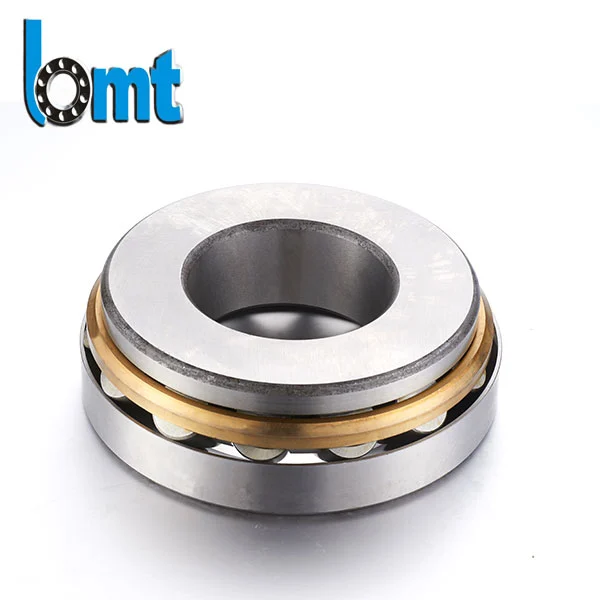
The industrial bearing industry is at the forefront of the fourth industrial revolution, adapting to the needs of increasingly automated and connected manufacturing environments. The focus has expanded beyond simple load capacity and speed to encompass intelligence, connectivity, and exceptional energy efficiency.
A dominant trend is the rise of the "Smart Factory." In this context, bearings are evolving into data-generating components. Integrated sensors can continuously monitor a bearing's condition, tracking vibration, temperature, and lubrication levels. This real-time data feeds into centralized systems, enabling predictive maintenance. This approach prevents unplanned downtime by scheduling service only when needed, drastically improving overall equipment effectiveness (OEE) and reducing operational costs.
Energy efficiency is a major driver of innovation. Manufacturers are developing new low-torque bearing designs and specialized greases that significantly reduce friction losses. In large-scale industrial applications with countless rotating elements, even a minor reduction in friction per unit translates into substantial energy savings and a lower carbon footprint.
Furthermore, bearings are being designed for use in extreme and specialized environments. This includes applications in food and beverage processing with coatings that resist corrosive washdowns, or in mining and heavy machinery with reinforced designs that endure severe loads and contamination. The ability to provide reliable performance in such diverse conditions is essential for global industrial operations. As automation continues to expand, the demand for these robust, intelligent, and efficient bearing solutions is expected to grow steadily.
We use cookies to offer you a better browsing experience, analyze site traffic and personalize content. By using this site, you agree to our use of cookies.Privacy Policy